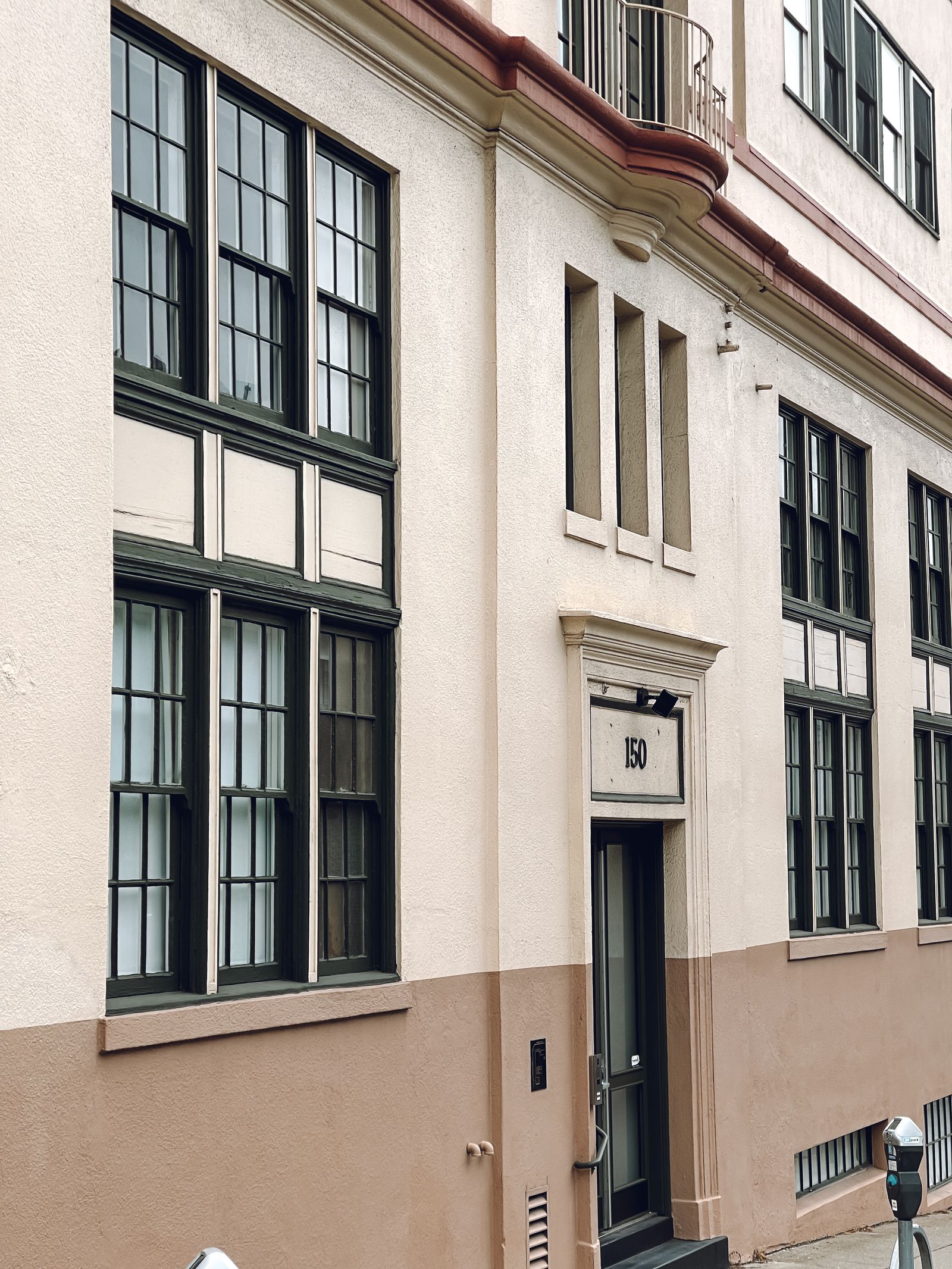
Soft washing is a condition-and-material decision
Soft washing generally relies more on compatible chemistry, dwell, and controlled rinsing than on impact force. It may fit selected stucco, masonry, painted surfaces, EIFS, precast, and other tested zones affected by algae, mildew, pollen, bird residue, and atmospheric film. Lower pressure can reduce one kind of mechanical stress, but chemistry, temperature, wind, overspray, water entry, and nearby landscaping still need control. A representative test area should be reviewed after drying when coating history, repairs, or material response is uncertain.
Sacramento buildings commonly combine stucco, brick, precast concrete, stone, glazing, metal trim, painted signs, sealants, and patched areas. A process suitable for a broad upper wall may be wrong for a porous accent, fragile coating, storefront frame, or detailed canopy. Start with the substrate and the condition. A routine maintenance rinse, organic-growth treatment, and specialty restoration are different scopes with different expectations. The proposal should say what is likely to improve and what remains outside ordinary washing.
Pressure washing has a specific, limited role
Pressure washing can be useful on selected concrete approaches, loading areas, parking structures, service yards, or other durable surfaces when material, force, distance, flow, drainage, and surrounding activity have been reviewed. It is not a universal answer for an entire commercial building. Excessive force can damage mortar, stucco, paint, sealants, soft stone, joint material, or fragile trim, and it can push water into openings or behind a coating. A powerful machine does not prove that the resulting finish will be better.
The lower wall of a Sacramento office may carry road film while an upper elevation has pollen, bird residue, or irrigation streaks. A hospital, hotel, state office, or retail center also has people and equipment close to the work zone. Ask why pressure is proposed on each surface, what test supports that choice, how overspray and access will be managed, and what will be inspected after the wall dries. If a dark mark is oxidation, mineral scale, corrosion, or coating failure, pressure may make it more visible or cause damage without solving the condition.
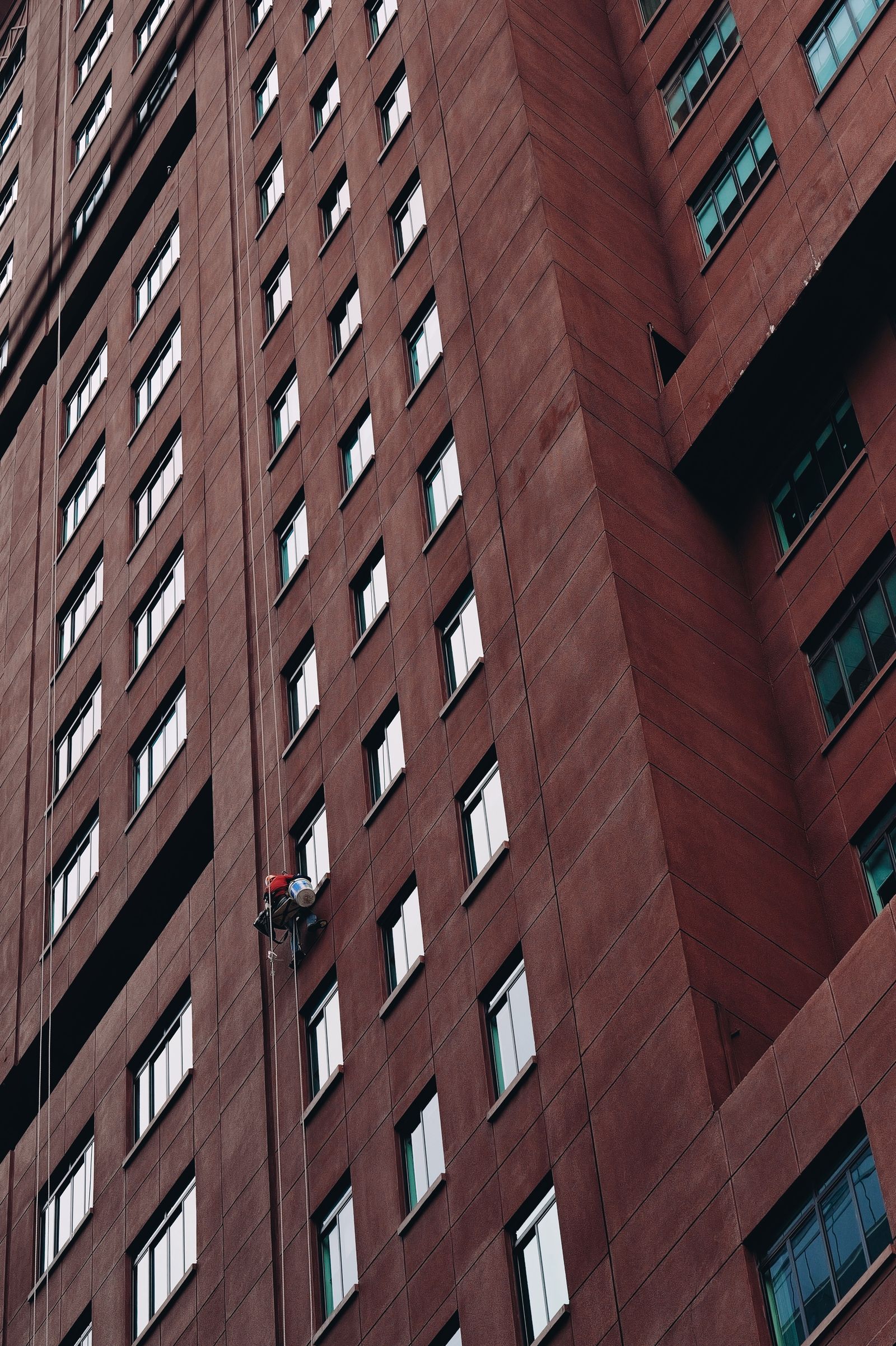
Sacramento heat makes timing part of method selection
Hot, dry summer days affect both soft washing and pressure work. Direct sun can warm stucco, metal, pavement, and glass, change dwell, accelerate drying, and make a rinse look uneven until the surface is fully dry. A good plan may divide a large elevation into smaller sections, use shaded or cooler work periods, and include additional dry-condition checks. Worker protection, rest, water, and shade are also production requirements, not optional details. The property should understand that weather can change the sequence or require a pause.
Winter rain and spring growth introduce another pattern. Damp north-facing areas, tree cover, roof drainage, irrigation, pollen, and bird activity can create repeat staining. Rain can change water volume, traction, visibility, stormwater controls, and drone feasibility. A hotel entrance may need a dry handback before guests arrive, while a medical or state property may require protected access throughout. The best method is chosen together with a work window, occupancy plan, and rescheduling rule.
Compare drone assistance with the required finish
Drone-assisted application or rinsing can be useful on selected broad upper elevations when clear stand-off distance, manageable wind, line of sight, a controlled launch area, water management, and public protection are all available. It may reduce lift staging on compatible walls. It cannot provide every type of contact detail. Squeegee-finish glass, frames, recessed features, mineral deposits, scraping, brushing, fragile trim, and repair work may need a pole, lift, roof access, or hand crew. Ask for a zone-by-zone plan instead of comparing equipment as though one tool covers the whole property.
Sacramento's state buildings, airport and logistics areas, hospitals, event venues, overhead wires, mature trees, rooftops, and active roads can affect aerial operations. Commercial drone work must follow current FAA requirements, including any applicable airspace and operations limitations. The operator should review the address and date, establish ground controls and emergency procedures, and name the backup access method if wind, visibility, people, traffic, or airspace makes aerial work unsuitable. A hybrid plan may be the most honest and effective option.
Compare water use and wash-water handling separately
Both methods move water and removed soil. Compare the source, expected application and rinse volume, slope, drains, low points, landscape, doors, equipment, vehicles, and neighboring property for each bid. The Sacramento Stormwater Quality program provides public guidance about protecting local waterways from pollutants in runoff, but a storm inlet is not automatic authorization for discharge. The contractor should state the assumptions it is making and identify what must be confirmed with the property or responsible authority.
Controls may include dry cleanup before washing, reduced flow, temporary berms, inlet protection, monitored recovery, sediment separation, holding capacity, or an approved disposal route. Each has limits. A filter may not remove dissolved constituents, a cover can shift, and a tank can fill faster than estimated. Ask for a stop condition if flow bypasses controls or the waste stream changes. A lower-water method is not automatically compliant, and a captured method is not automatically approved without the applicable site and discharge review.
A closeout record should show completed zones, remaining conditions, water controls used, weather interruptions, and any source issue such as a leaking downspout or irrigation overspray. That record lets the facilities team decide whether the next visit should be maintenance, contact detail, restoration, repair, or no work. It also helps compare bids based on the full operating plan rather than the advertised pressure rating or a promised water percentage.
Use the quote to choose a defensible Sacramento method
Ask every bidder to identify the materials, visible conditions, method by zone, access equipment, water assumptions, weather limits, occupied-site controls, expected finish, exclusions, and closeout documents. Compare broad facade washing separately from glass detailing, canopy work, hard-water removal, oxidation treatment, construction residue, graffiti, repairs, and recurring maintenance. If drone assistance is proposed, ask where it is feasible, what site and aviation conditions are required, and what grounded backup method will be used if those conditions change.
Send the property address, photos, approximate height, materials, priority zones, state or medical security needs, hotel or retail operating schedule, event dates, water access, drainage observations, and desired result. Drone Building Cleaners can help determine whether soft washing, pressure washing, contact work, drone assistance, a lift, or a hybrid plan fits the building. Call +1 239-351-2897, email contact@dronebuildingcleaners.com, or request a quote so the recommendation is tied to the Sacramento property instead of a generic machine preference.